

South Park Condo Market Snapshot | October 2026
October was another quiet month for South Park condominium sales. Just three condos closed escrow, compared with 14 completed leases. With 78 condos on the market, buyers have plenty of options and little urgency to act.
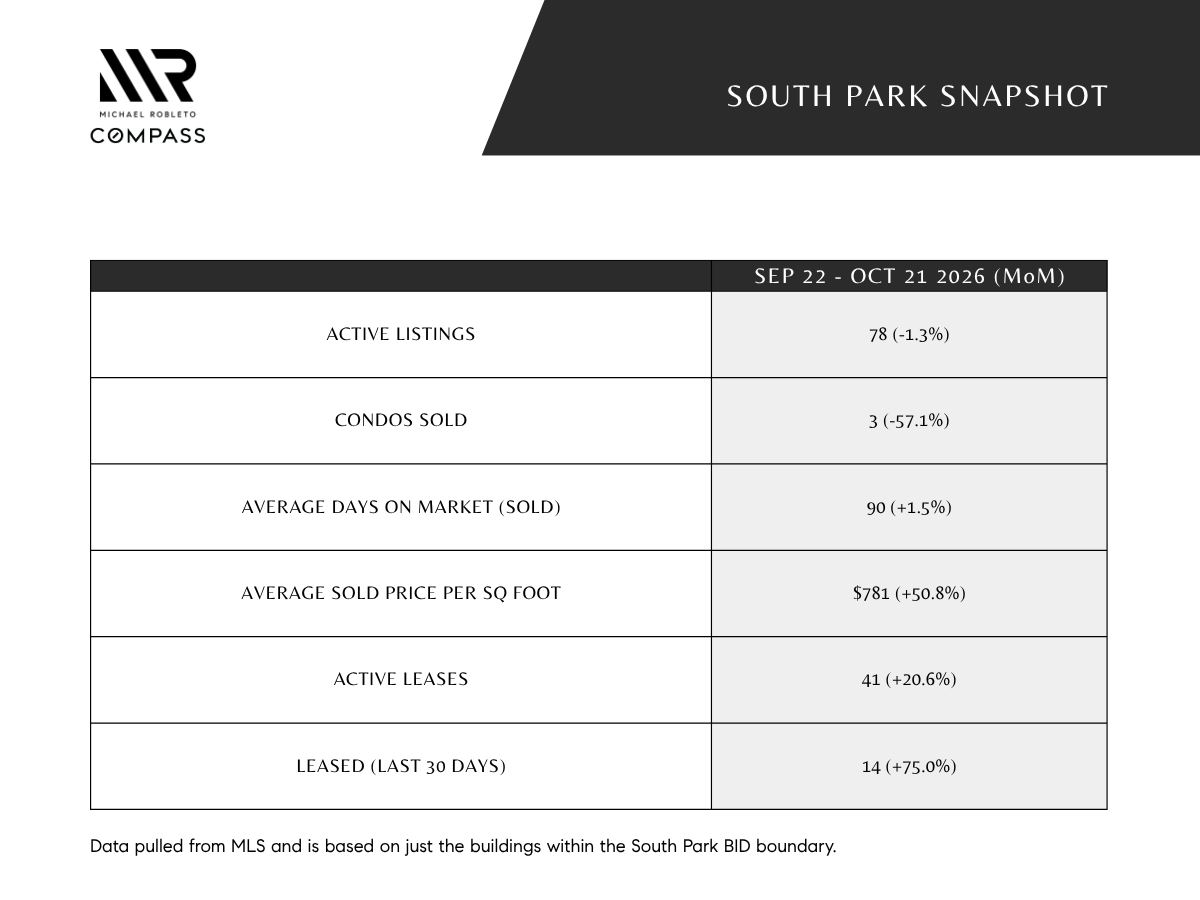
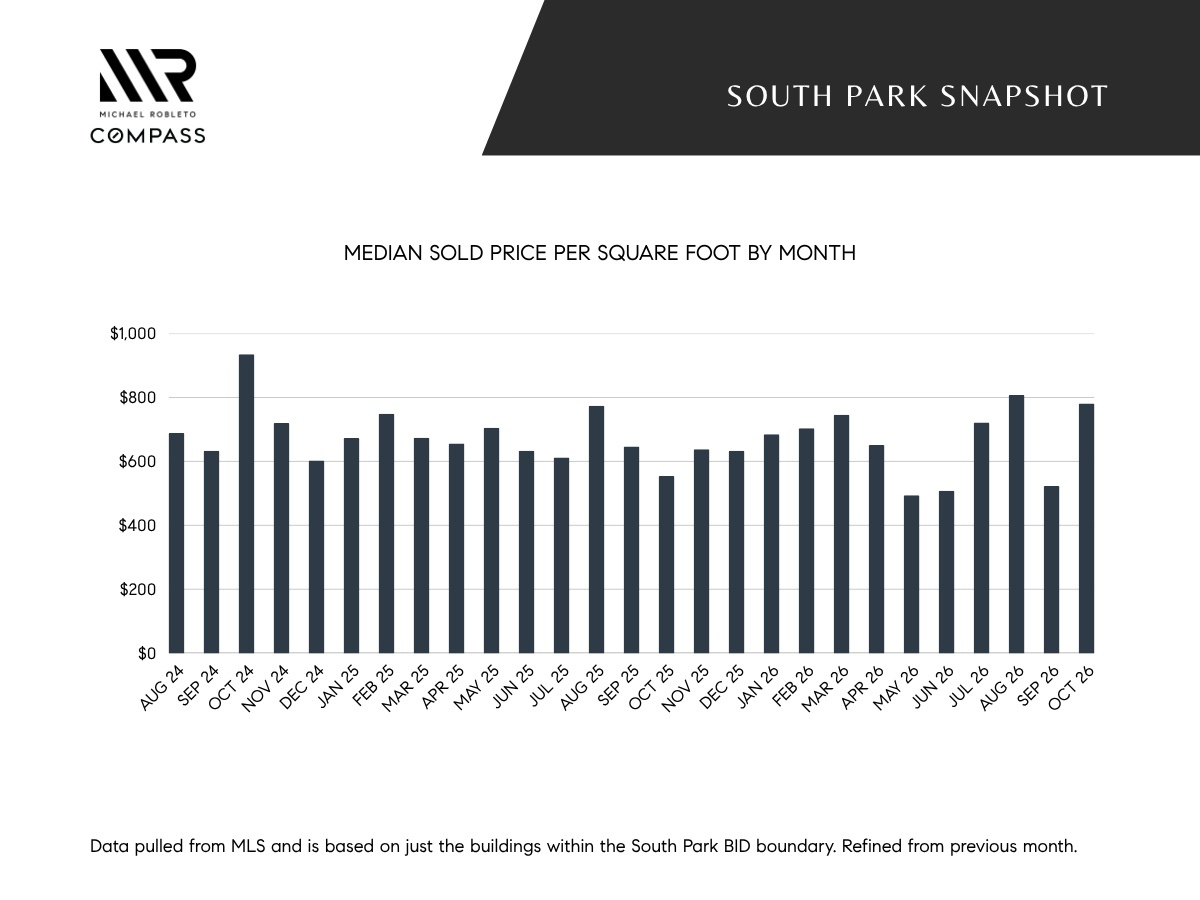
The month's average sold price of $781 per square foot might suggest otherwise, but two luxury transactions skewed that figure upward (an EVO Penthouse sold for $3M). September's seven sales averaged $518 per square foot, illustrating how easily a handful of transactions can distort our relatively small market.
We are also entering the traditionally slower winter selling season. In a sampling of quarterly downtown sales reports spanning 15 years, fourth-quarter sales averaged approximately 37% fewer transactions than second-quarter sales. The sample isn't a complete seasonal history, but it reinforces what real estate agents routinely experience: activity generally slows as the holidays approach.
Meanwhile, mortgage rates remain elevated, and buyers should not count on a dramatic return to the historically low rates of 2020 and 2021. Financing costs could remain a significant obstacle well into 2027 as rates are projected to stay at current levels.
But there's a bigger question worth asking: How did downtown's condominium market get here, and what will it take to turn things around?
Fifteen Years of Downtown Real Estate
To better understand our current market, I spent considerable time reviewing downtown condominium sales over the past year, along with 15 years of quarterly market reports covering seven downtown zip codes.
The numbers tell a fascinating story.
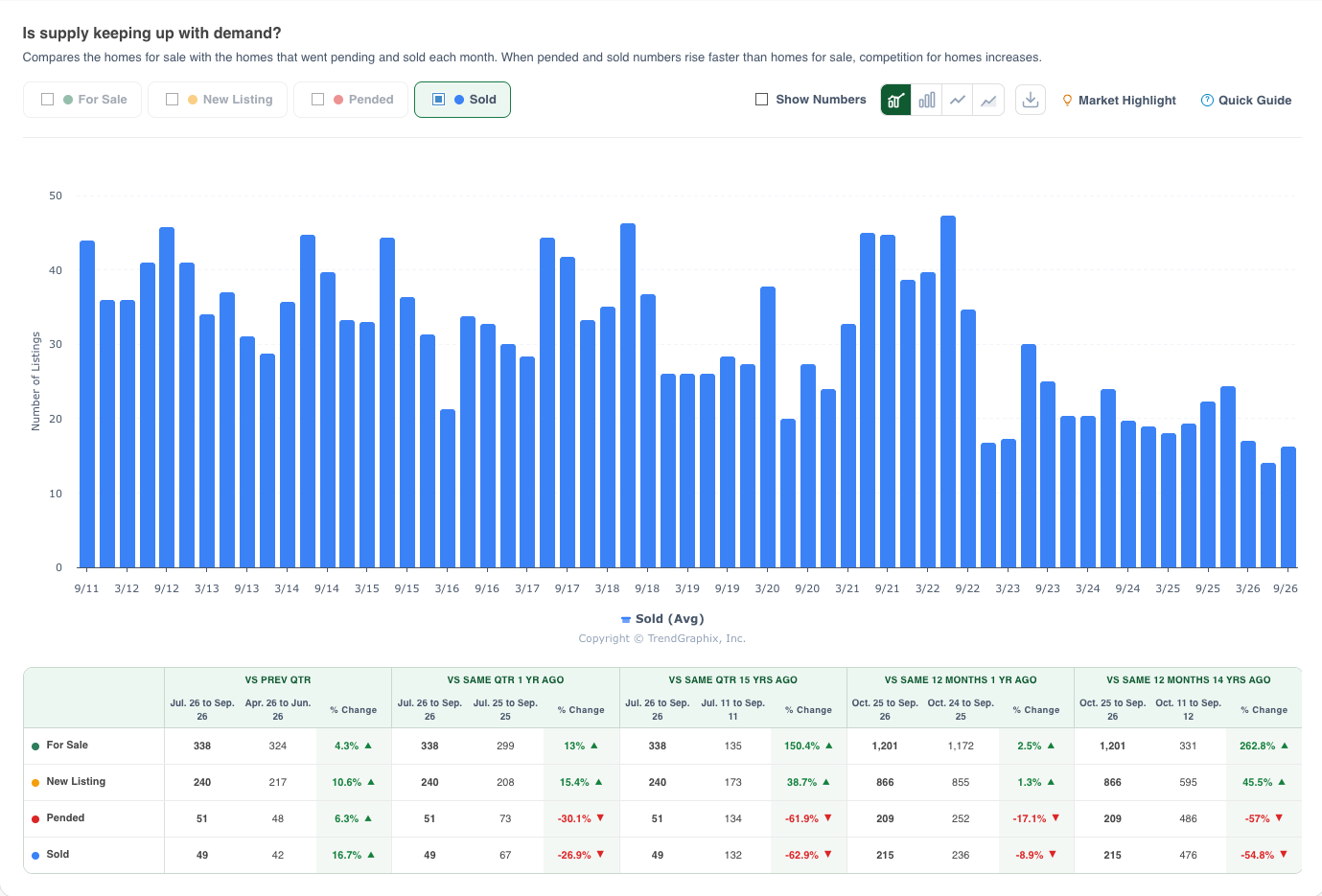
In the third quarter of 2021, downtown recorded 134 condominium sales. Five years later, in the third quarter of 2026, that number had fallen to just 49, a 63% decline.
During that same period, available inventory increased from 189 to 338 listings, while months in inventory, a measure of how long it would take to sell the available homes at the current pace, ballooned from 4.2 months to 20.7 months.
Perhaps most surprising is that downtown's residential market was performing relatively well in 2021, despite the pandemic, civil unrest, and widespread predictions of an urban exodus.
The real deterioration began in 2022.
What Changed?
There wasn't one defining event. Rather, several developments converged.
First came the pandemic and the normalization of working from home. Downtown's economy has long depended on its concentration of office workers. As remote and hybrid arrangements became permanent for many employees, fewer people needed to commute downtown or live near their offices. Restaurants, retailers, and other businesses lost a substantial portion of their weekday customer base.
Then came the mortgage-rate shock. Rates that had hovered near 3% in 2021 climbed toward 7% by late 2022, dramatically increasing monthly ownership costs. That affected housing markets throughout Southern California, but downtown was simultaneously confronting other challenges.
Public safety also became an increasingly significant concern. I analyzed hundreds of thousands of lines of LAPD crime data to better understand what was happening. Within a preliminary geographic area covering downtown and some adjacent neighborhoods, reported aggravated assaults increased approximately 40% between 2020 and 2023, while burglaries from vehicles increased approximately 92%.
Those increases coincided with the housing market's downturn. They don't establish that crime caused falling sales, and 2020 was an unusually quiet year because of pandemic restrictions. Nevertheless, the findings suggest that concerns about neighborhood safety cannot simply be dismissed as perception.
Together, these factors help explain the decline in demand. They also point to a more complicated problem.
Downtown's Negative Feedback Loop
When fewer people commute or live downtown, businesses lose customers. Some close, leaving vacant storefronts and less activity on the sidewalks.
Quieter streets and empty storefronts can diminish the sense of safety and vibrancy that attracts residents, employers, and visitors. That, in turn, makes it harder to attract new investment and businesses.
The cycle reinforces itself.
And unlike mortgage rates, which can change relatively quickly, rebuilding an urban neighborhood's economic and social vitality takes sustained effort.
There is, however, an encouraging counterpoint to our sluggish sales market: people continue to rent in South Park.October's 14 completed leases compared with just three sales demonstrate that downtown continues to attract residents, even when relatively few are ready to purchase.
That distinction matters. Demand for downtown living hasn't disappeared. The challenge is converting that interest into long-term confidence and homeownership.
The recently adopted DTLA 2040 Community Plan also provides a framework for substantial residential growth, with capacity for as many as 100,000 additional homes by 2040. Much of that development may take the form of rental apartments.
For existing condo owners, a larger residential population could ultimately be beneficial. More neighbors support more restaurants, retailers, and services, strengthening the amenities that make urban living desirable. And if the supply of new ownership housing remains comparatively limited, existing condominiums could become more attractive.
Of course, additional housing capacity doesn't guarantee construction, and stronger condominium values will depend on the neighborhood becoming a place where more people want to put down roots.
What New York Can Teach Us
I recently watched PBS's documentary series about the history of New York City. Its depiction of the city's struggles in the 1970s, 1980s, and early 1990s was a reminder that even America's greatest urban centers can experience profound periods of decline.
New York's subsequent transformation didn't happen overnight, nor was it the result of any single policy.
Three lessons seem particularly relevant to downtown Los Angeles.
Visible improvements matter. Cleaner, safer, and better-maintained public spaces help restore confidence. New York's revitalization of places such as Bryant Park and Times Square demonstrated how dramatically the experience of a neighborhood can change.
Thriving businesses contribute to safer, more active streets. Occupied storefronts bring employees, customers, lighting and activity to the sidewalks, creating a more welcoming environment.
Recovery requires sustained commitment. Improvements in public safety, public spaces, and economic development must reinforce one another over years, not just during a major event or election cycle.
With another election approaching, downtown voters have an opportunity to evaluate how candidates and public officials propose to address crime, maintain public spaces, and encourage economic activity. The important questions aren't simply what policies are promised, but how their effectiveness will be measured and whether improvements can be sustained.
Reasons to Be Optimistic
Fortunately, downtown has several meaningful opportunities on the horizon.
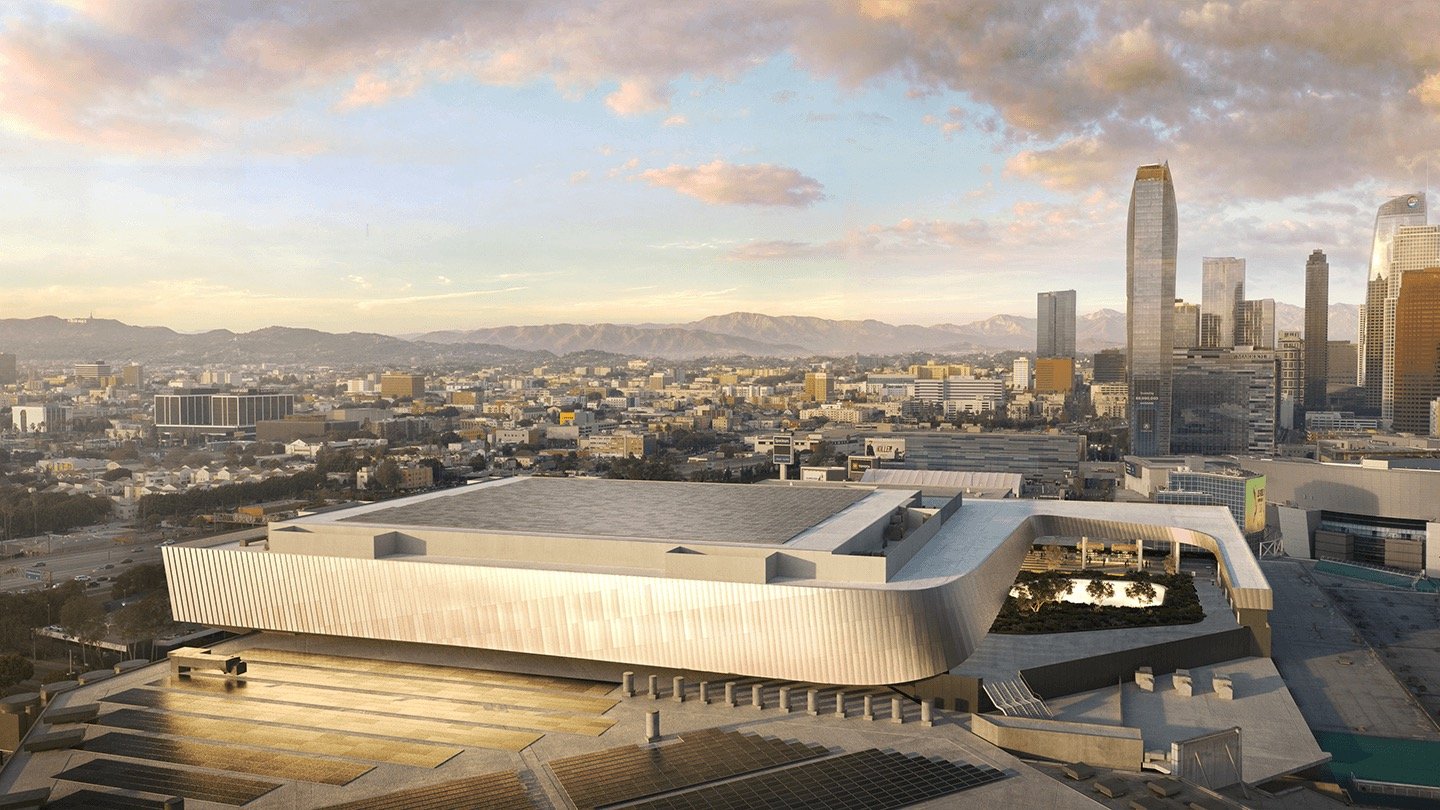
The Los Angeles Convention Center expansion is already underway. The multibillion-dollar project will substantially increase exhibition and meeting space, strengthening downtown's ability to attract conventions, visitors, and business activity long after construction is completed in 2029. Several first-time conventions have been booked.
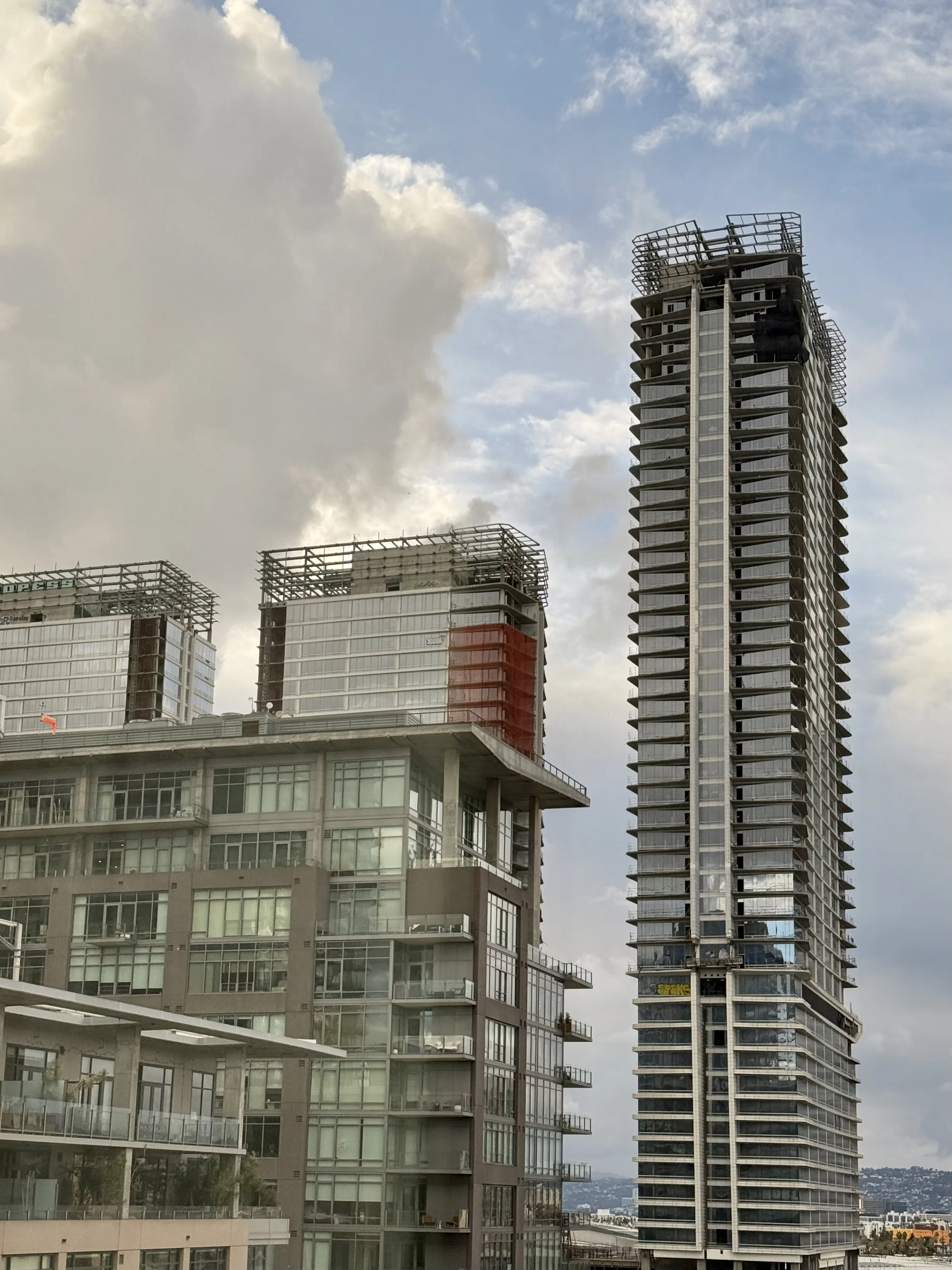
Oceanwide Plaza, the unfinished towers across from Crypto.com Arena, may finally be moving toward completion. Following years of bankruptcy proceedings and highly visible deterioration, a proposed sale and cleanup agreement has opened a path toward redevelopment. If you look up today, you will see most of the graffiti has now been removed. There's still substantial work ahead, but progress on such a prominent property would be particularly meaningful for South Park.
Vacant to Vibrant, a new initiative launched by Mayor Karen Bass in partnership with Downtown Works, is taking direct aim at empty storefronts. The initial $500,000 program helps connect entrepreneurs with available commercial spaces and provides assistance with leasing and opening costs. Its scale is modest, but its approach addresses one of the most visible contributors to downtown's negative feedback loop. Let’s hope the implementation is properly executed.
And then there are the 2028 Olympic and Paralympic Games.
The games will bring international attention to Los Angeles, with downtown hosting several events. They create an opportunity not only to improve our streets and public spaces, but to introduce visitors, including Angelenos who rarely venture downtown to the restaurants, architecture, cultural institutions, and neighborhoods that make this part of the city special.
My hope is that many of those visitors will rediscover downtown and fall in love with it.
The next couple of years won't necessarily be easy for condo sellers; buyers have all the advantage and a meaningful recovery may take longer than we'd like. But New York's history reminds us that cities can reverse their fortunes.
Downtown's future won't be determined by interest rates alone. It will depend on our collective ability to make this a neighborhood where people feel safe, businesses can thrive, and residents are proud to call home.
The ingredients for a comeback are beginning to emerge. Now comes the work of making it happen.
About the Author
Mike Robleto is a residential real estate advisor with Compass, specializing in architecturally significant homes, historic properties, and urban residences throughout Los Angeles. A downtown resident since 2009 and board member of the South Park Neighborhood Association, Mike brings firsthand neighborhood knowledge and a data-driven perspective to the downtown housing market.
Beyond DTLA, Mike represents buyers and sellers throughout Pasadena, Altadena, Silver Lake, Los Feliz, Highland Park, and Eagle Rock. Whether you're considering a move within downtown, exploring a new neighborhood, or planning your next chapter elsewhere in Los Angeles, Mike can help you navigate the market with confidence.