

Help Us Plant a Native Pollinator Corridor on 11th Street
Last month, I asked a question: Could South Park become an urban oasis? This fall, we’re taking the first step toward making that idea a reality!
Little did I know that, as I was writing the piece for last month’s newsletter, the Social District BID team was reaching out to SPNA to propose a community planting project on 11th street to replace some of the rose bushes that have struggled.
SPNA is excited to announce a partnership with the BID to create a “Native Pollinator Corridor” along 11th Street, using Southern California native plants selected for our climate. In early November, we’re hosting a community planting day to get the first phase in the ground.
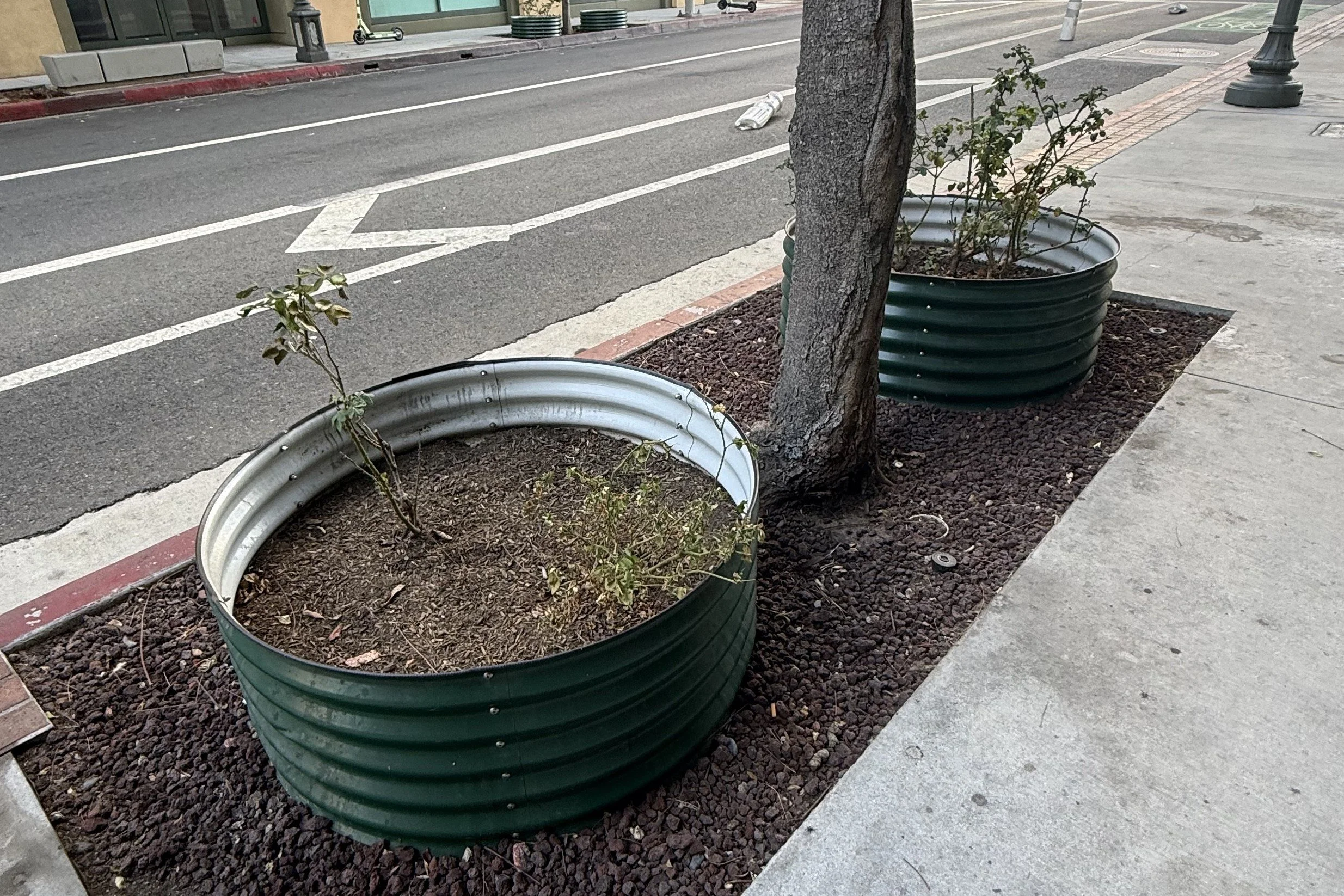
We will be replacing many of the roses along 11th street during a community planting day in November.
If you would like to join us for the community planting day, sign up at https://tinyurl.com/native11thstreet..
California native plants evolved to handle our long, dry summers and seasonal winter rains. Once established, many can survive on rainfall alone, without regular irrigation. Their deep root systems can also help absorb water during heavy rains and reduce runoff. In a neighborhood where nearly every surface is concrete, asphalt, or a building, bringing native plants back into the landscape is one way we can make South Park more resilient to drought, extreme heat, and increasingly intense rain events.
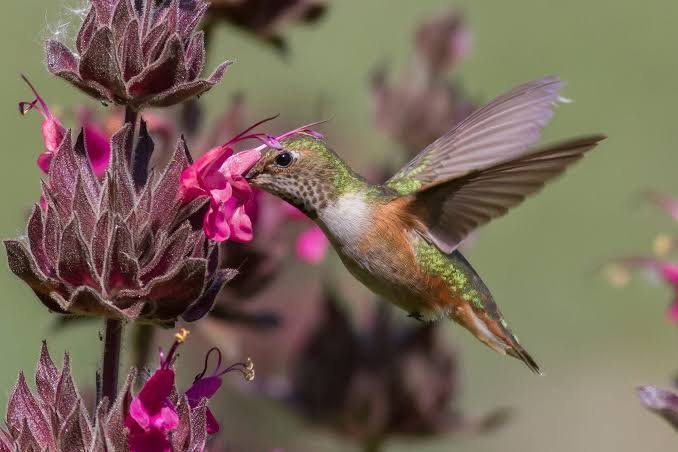
Native Hummingbird Sage attracts beautiful hummingbirds. Photo credit Birds and Blooms.
Native plants can also help restore something that our highly urbanized neighborhood has lost: habitat. The difference native plants can make is huge. A recent Cal State L.A. study of yards across Greater Los Angeles found that native landscapes supported four times as many flower-visiting insects and birds as conventional landscapes, along with 1.5 times as many pollinator species. Native plants support hummingbirds, butterflies, native bees, and other pollinators, even in the middle of downtown Los Angeles. As those plantings grow and connect, individual planters can become part of a larger network of habitat through the neighborhood and the broader region.
For our first phase, we’ll be planting a mix of flowering California natives chosen to provide color and habitat throughout the year. Fall is the ideal time to plant because it gives the plants the cooler, wetter months to establish strong root systems before their first hot, dry summer.
This first community planting day is only the beginning. SPNA will also be looking for neighbors who want to help care for the corridor over time, primarily through occasional pruning and weeding. Watering will be handled in coordination with the BID while the plants are getting established, so we can make sure they receive the water they need without accidentally overwatering them.
If this first phase is successful, we hope it can be the start of native plant habitat throughout South Park. Future phases could address the landscaping around the planters and rethink how we accommodate our many canine neighbors. Existing designated dog relief areas are covered in artificial turf, a petroleum-based material that can shed microplastics. The opportunity exists to plan these spaces more thoughtfully so they work better for people, pets, plants, and wildlife.
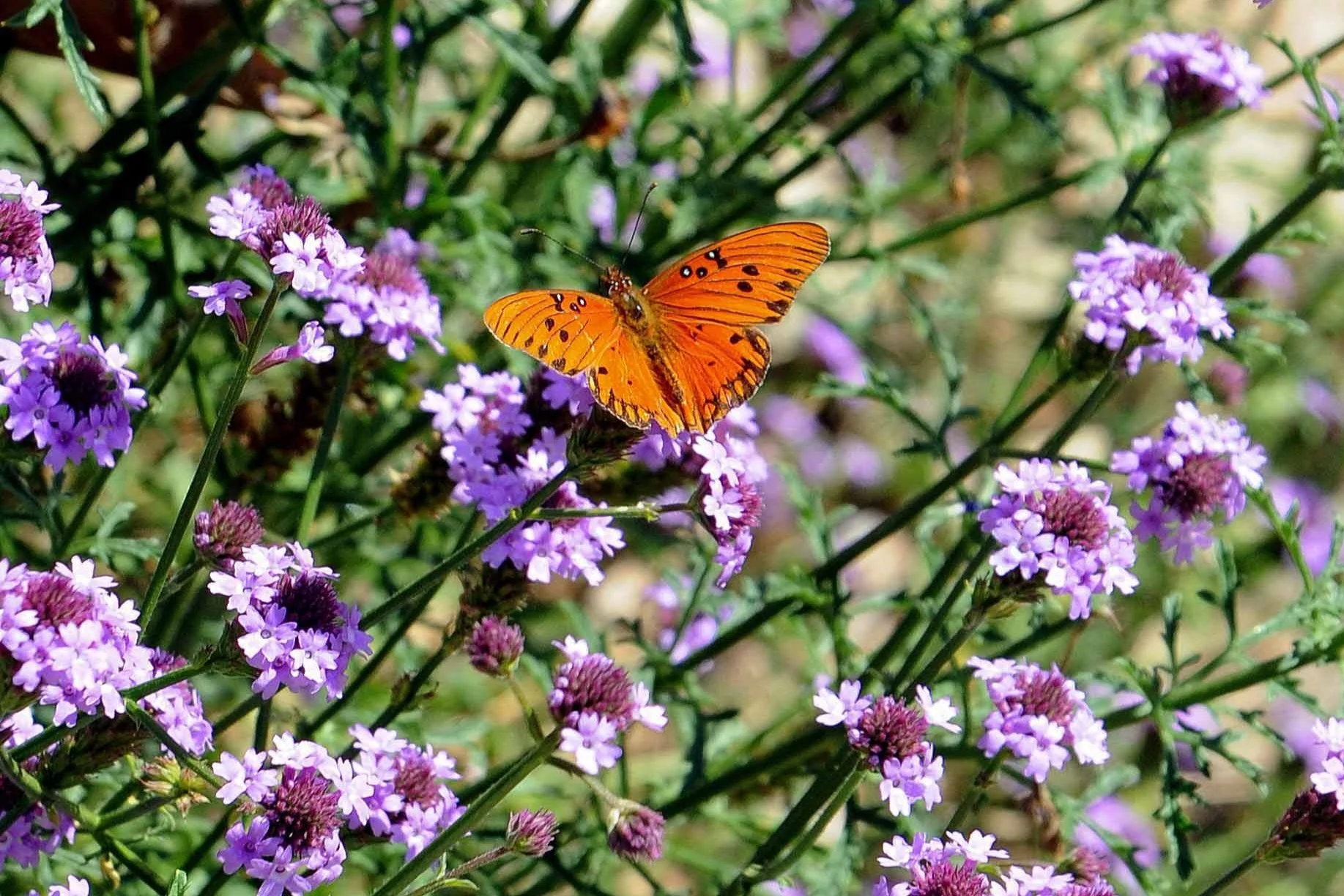
Verbena Lilac is an example of a pollinator plant that is native to Southern California. Photo credit Robert Perry.
Much of the landscaping planted in L.A. consists of generic plants that could be absolutely anywhere. We have an opportunity to be much more ambitious about what our public landscaping can do. Instead of treating landscaping as decoration, we can create a greener South Park that uses dramatically less water, helps cool our streets, captures rainwater, restores habitat, and supports the native species that have been pushed out as Los Angeles has developed.
Next month, we’re starting with 11th Street and we hope you’ll join!
By Michelle Morehead