

Could South Park Become an Urban Oasis?
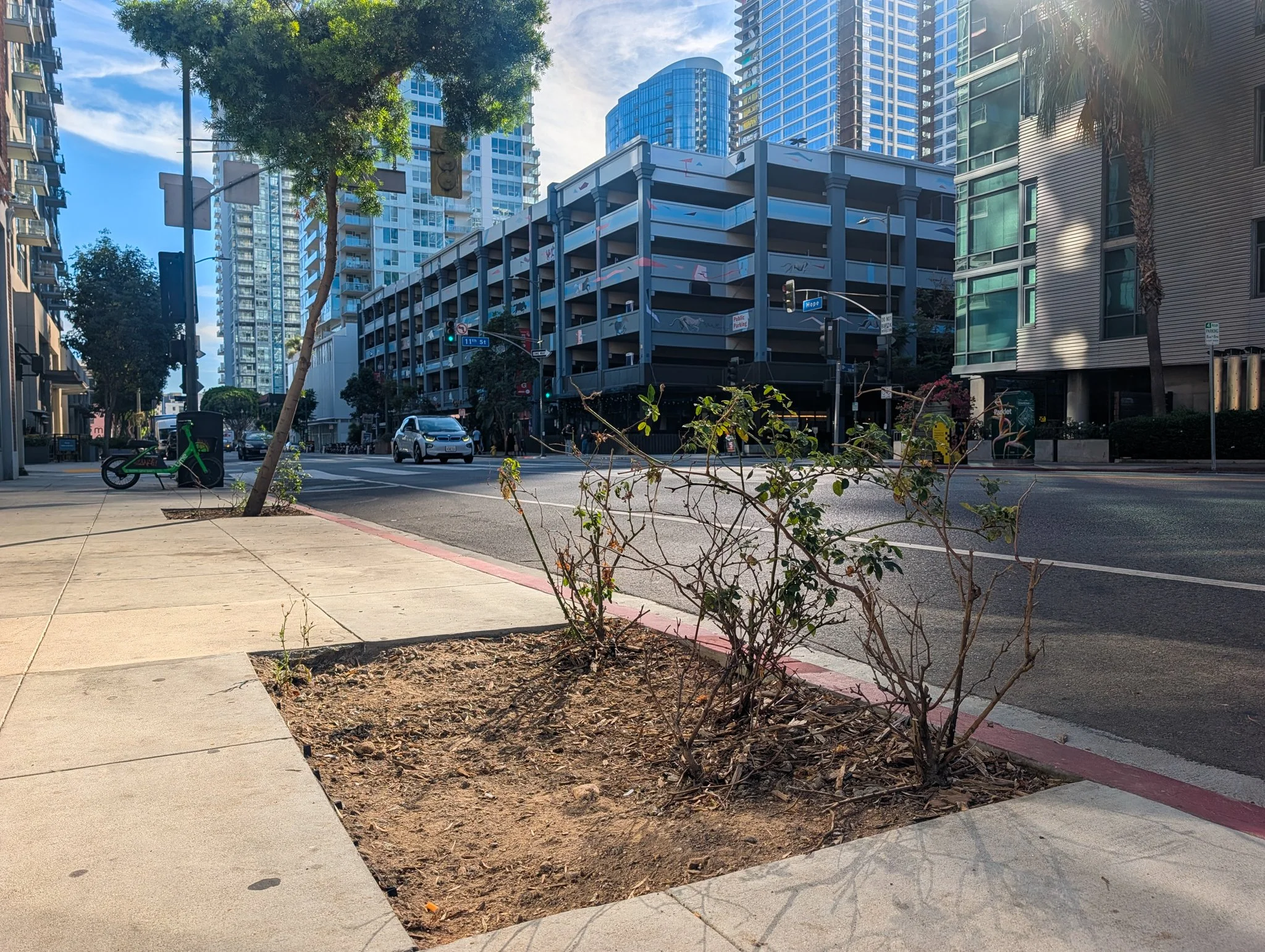
Struggling rose bushes fill South Park tree wells, illustrating the challenge of keeping ornamental landscaping healthy in downtown’s harsh growing conditions.
As you walk around South Park, you have likely seen a lot of people working very hard to keep our landscaping alive. Business Improvement District (BID) employees and property maintenance crews water rose bushes and other ornamental plants in tree wells and planters throughout the neighborhood. And yet, in many places, those plants look pretty shabby. In others, they’ve died altogether.
At the same time, our streets can be brutally hot. Even some of Los Angeles’s nicest pedestrian plazas and streetscape projects become uncomfortable places to spend time in the summer because there simply isn’t enough shade or vegetation to counter all that pavement and reflected heat. Just try walking through the L.A. LIVE pedestrian plaza mid-afternoon in the current summer heat.
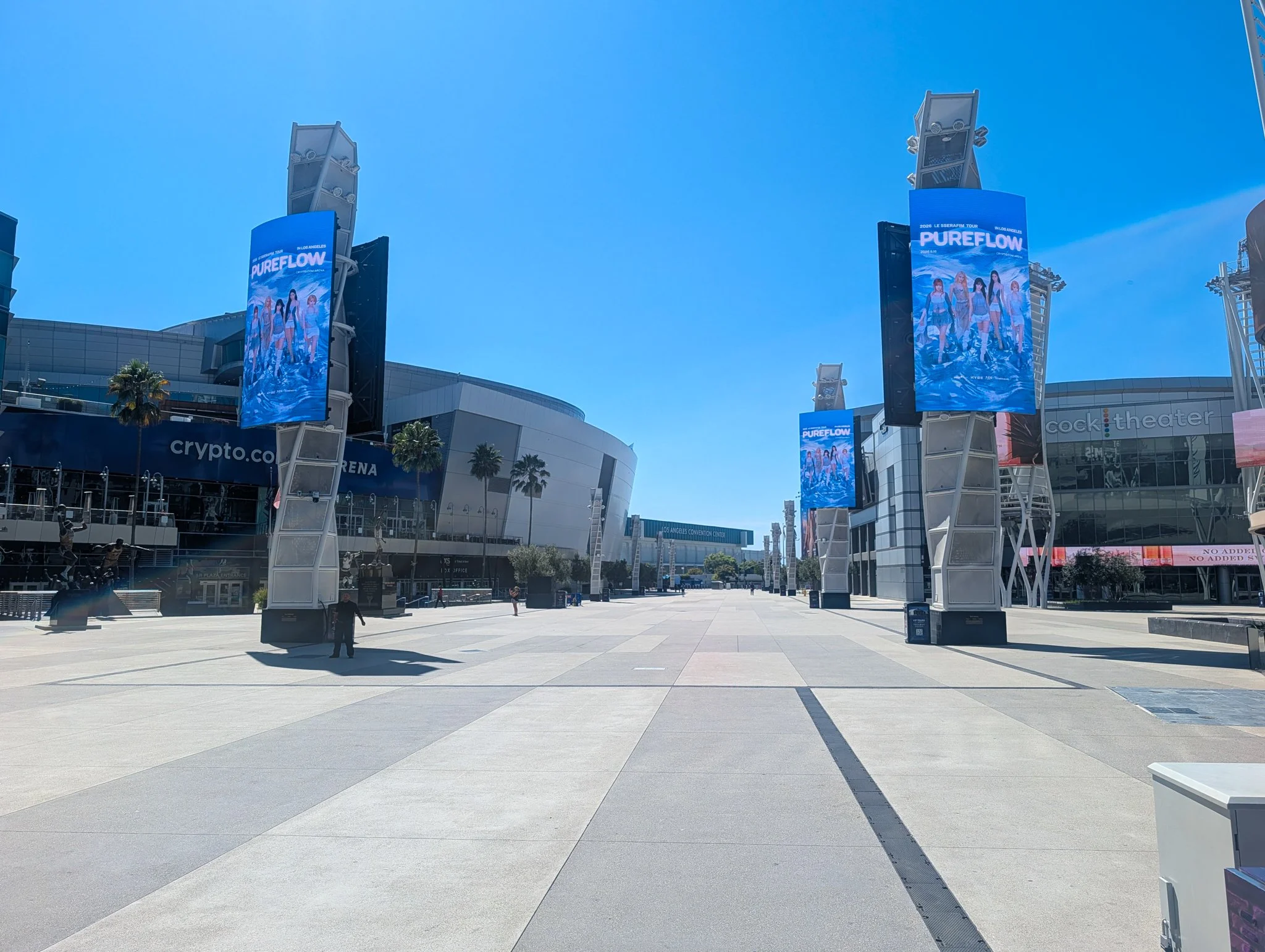
The largely unshaded L.A. LIVE pedestrian plaza demonstrates how even spaces designed for pedestrians can become uncomfortable in the summer sun.
It makes me wonder: What if, instead of constantly fighting the Southern California climate, we designed our neighborhood around it?
I recently came across a video of Dunbar Spring, a neighborhood in Tucson, Arizona that residents have gradually transformed with native plants. Despite being in the middle of the desert, parts of the neighborhood now feel like an oasis. Trees and native vegetation provide shade, capture stormwater, and create habitat for birds, insects, and other wildlife.
What would the downtown Los Angeles version of that look like?
South Park is intensely urban, but we have a surprising amount of space for plants: hundreds of tree wells, landscaped setbacks, planters, small parks, and stormwater infrastructure. Along 11th Street, a major city project created stormwater catchment areas with landscaping that looked great initially, but many of those plants didn’t survive. More recently, the BID has replanted many of those areas with roses and other ornamentals, some of which are also struggling despite regular watering.
I would love to see us try something different: commit to planting only California native species in our public landscaping going forward.
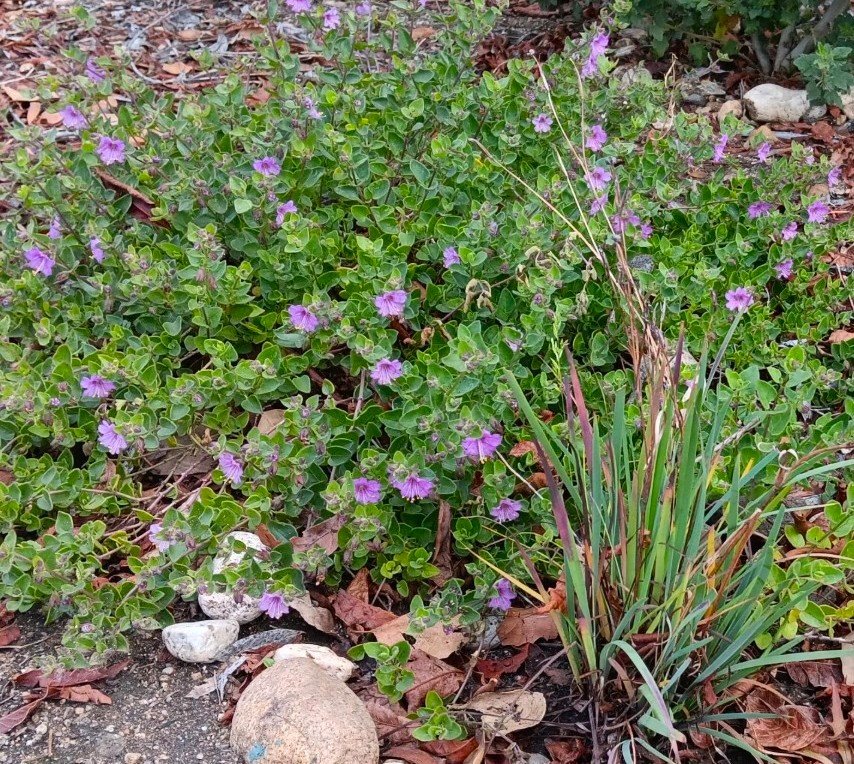
California four o'clock blooms in native-planted median in Lincoln Heights. Photo credit @ave20nativeplants on Instagram.
That wouldn’t mean tearing out every existing plant tomorrow. As plants die, tree wells are replanted and new streetscape projects are built. In this way, we could gradually replace what’s there with plants that evolved to survive in our climate.
The result could be landscaping that requires less water and maintenance while providing habitat and food for native insects, bees, butterflies, and birds. Imagine walking along shaded sidewalks with butterflies and hummingbirds visiting the flowers.
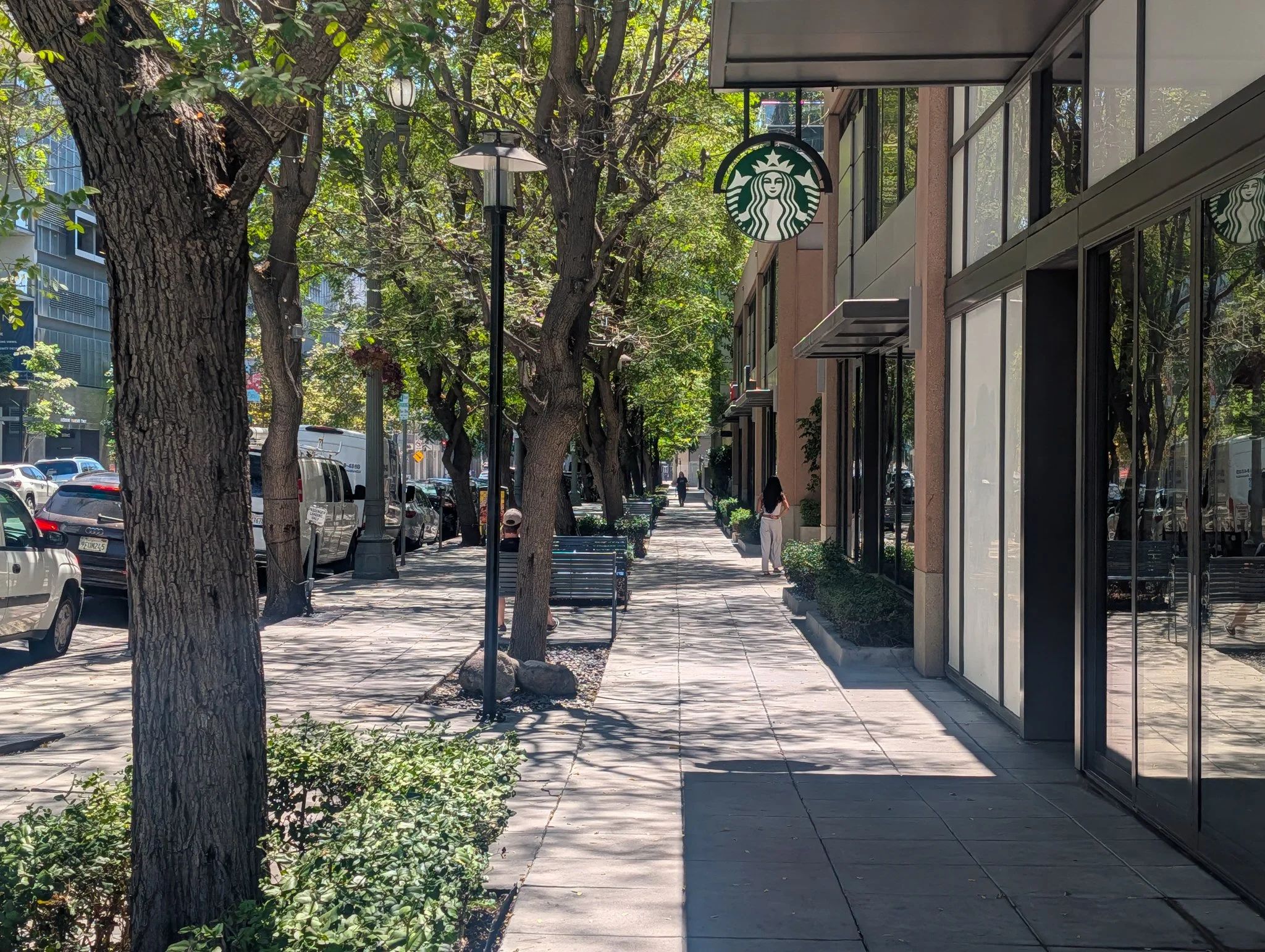
Mature street trees create a shaded, green stretch of Grand Avenue, showing how much a healthy landscape can change the pedestrian experience.
Of course, planting the right plants is only part of the equation. South Park is also home to a lot of dogs, and our landscape needs to account for them. We already have several dedicated dog relief areas, but many rely on artificial turf that gets hot and doesn’t drain particularly well. More well-designed dog areas could serve their needs while protecting nearby landscaping, rather than expecting every tree well to function as both a garden and a dog relief area.
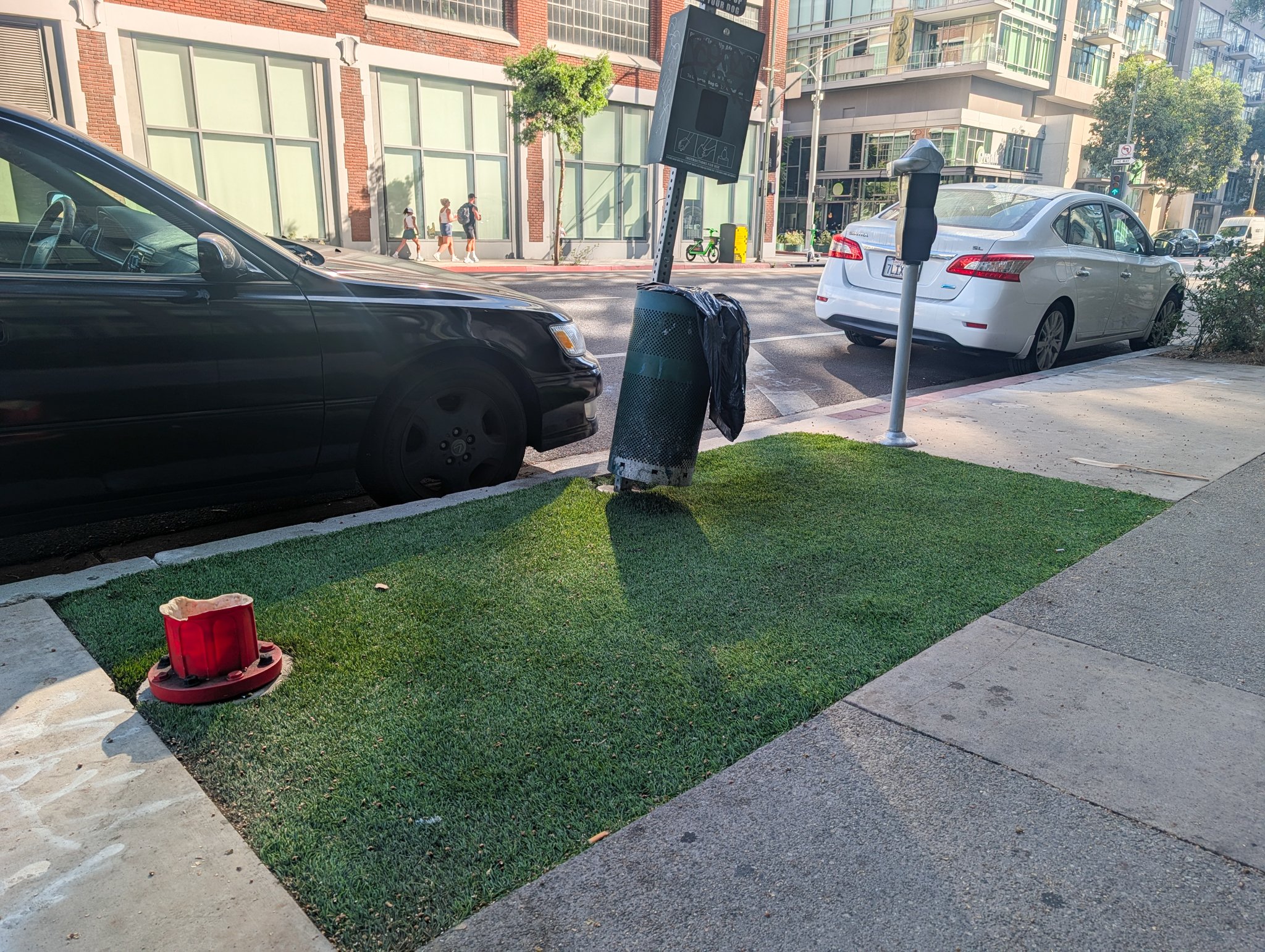
One of South Park’s dedicated dog relief areas provides turf and a waste station, but the artificial turf gets hot in the sun and can be difficult to keep clean and well-drained.
As our summers continue to get hotter, creating a more comfortable pedestrian environment is increasingly important. The trees and landscapes we plant today should be designed not just for our current climate, but for the hotter conditions we expect in the decades ahead. We should be thinking about shade, trees, and living landscapes as essential pedestrian infrastructure—not decoration added after we decide where the concrete goes.
That makes the planned transformation of 11th Street particularly exciting. There are already plans to make it a better pedestrian connection between L.A. LIVE and the rest of downtown. What if it also became a demonstration of what a climate-appropriate Los Angeles street could look like—full of native trees and plants, shade, stormwater capture, birds, and pollinators?
But we don’t have to start by redesigning an entire street.
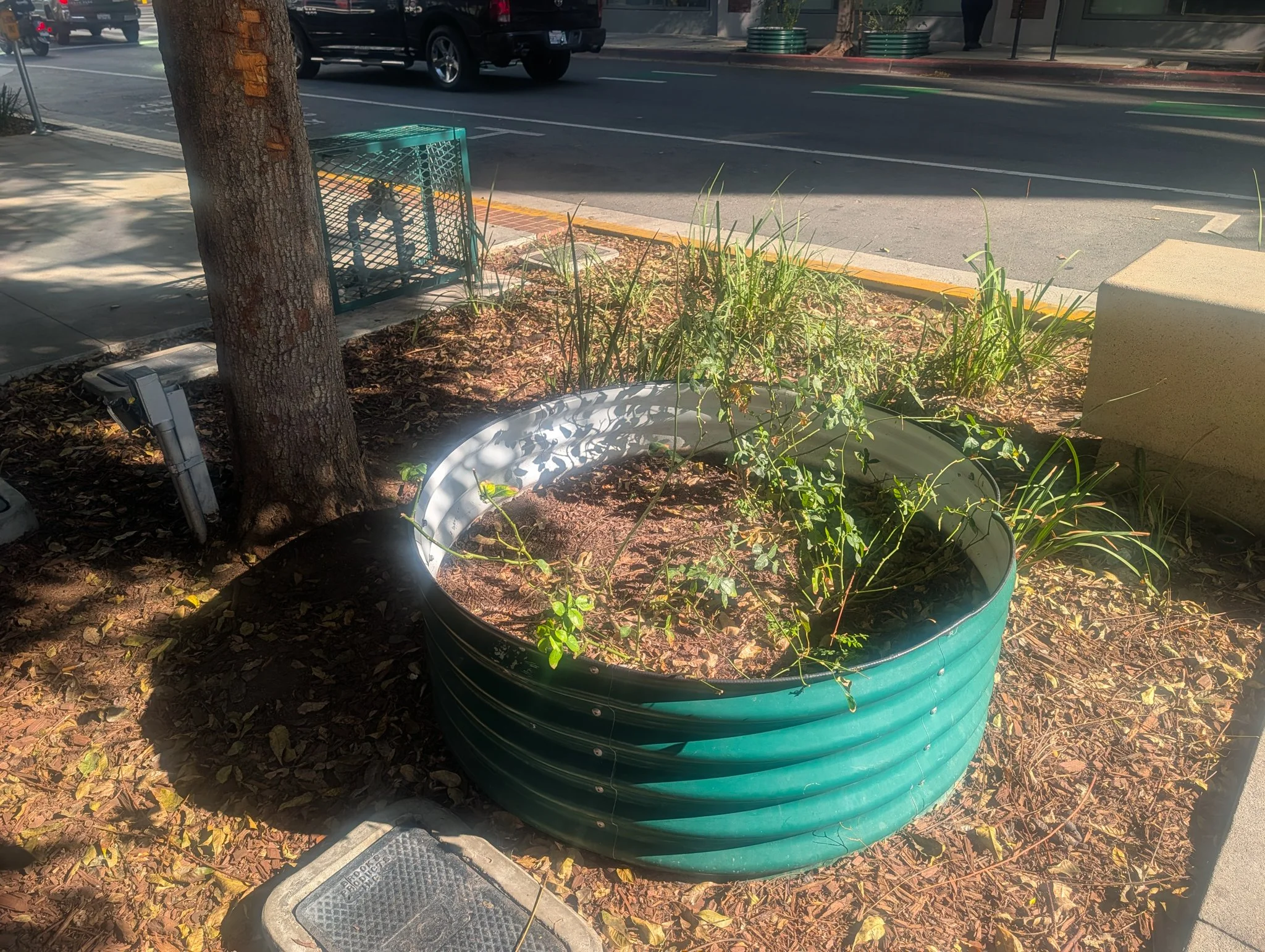
Roses and ornamental grasses in one of 11th Street’s stormwater catchment areas have begun to look sparse despite regular maintenance and watering.
There are tree-wells in South Park right now where almost everything has died. We could start with just a few, working with native plant experts to select species suited to downtown’s harsh conditions and tracking how well they survive and how much water and maintenance they require.
If successful, native planting could gradually expand as other tree wells are replanted and new projects move forward. Over time, these individual decisions could help turn South Park into an urban oasis in the middle of downtown—a neighborhood with more shade and greenery, where native plants thrive in our climate, and birds, butterflies, and other wildlife have a place in the city too.
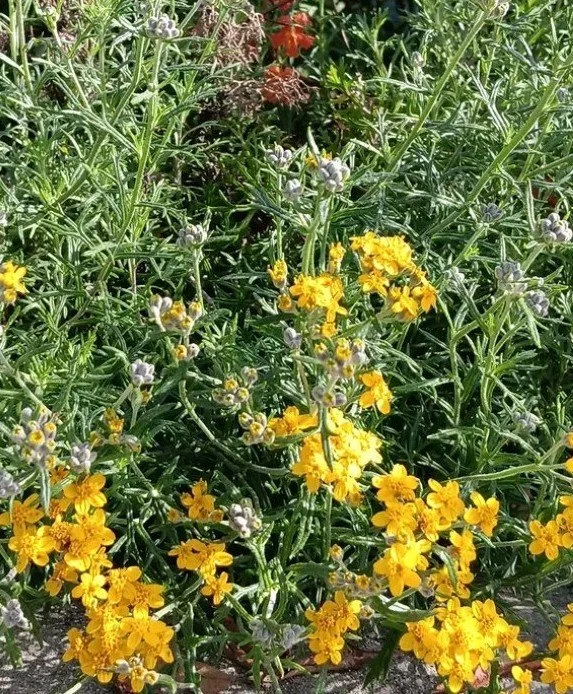
Native plants blooming in a Lincoln Heights median, include showy penstemon, golden yarrow, tansy leaf phacelia, bird's eye gilia, arroyo lupine, common yarrow, and deerweed. Photo credit @ave20nativeplants on Instagram.
We already spend considerable time, money, and water trying to make South Park greener. Maybe the question isn’t whether we need more landscaping.
Maybe we need to start planting the landscape that belongs here.
By Michelle Morehead