

Broadway’s Future Is Still Being Decided - And South Park Residents Have a Voice
At first glance, this may seem like an issue happening outside of South Park. Historic Broadway lies just a couple of blocks outside our neighborhood. But for many South Park residents, Broadway is part of daily life. We shop there, eat there, attend performances there, walk there, work there, and many of us ride the buses that travel through the corridor. Decisions about Broadway also affect traffic patterns, transit operations, and downtown’s future.
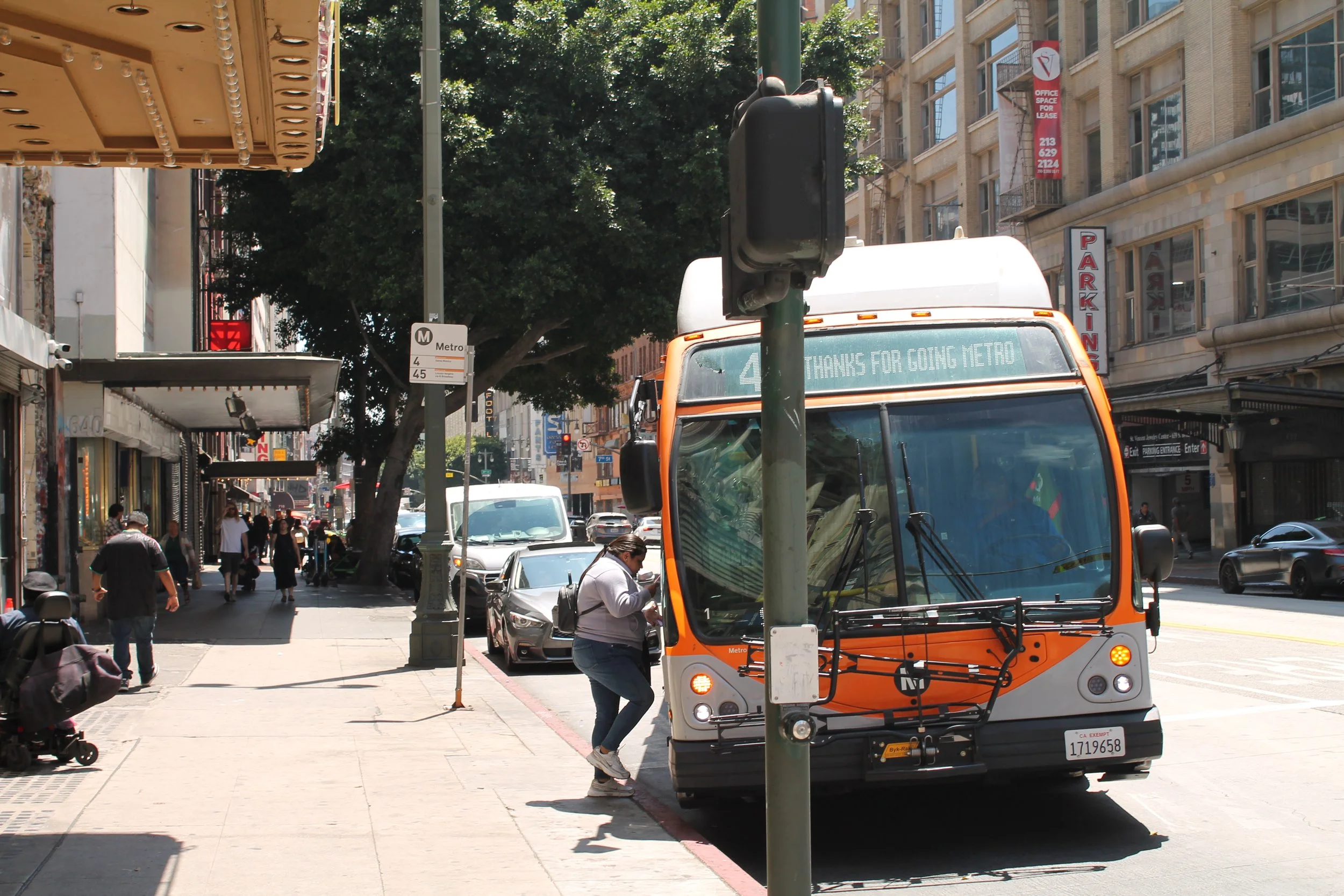
A passenger boards a northbound Metro Line 45 bus between 6th and 7th Streets on a sunny summer afternoon
That is why the South Park Neighborhood Association has joined the Save Historic Broadway Coalition, a growing group of residents, businesses, cultural institutions, and community organizations working to ensure that future transit improvements strengthen, rather than diminish, one of DTLA’s most important streets.
As Los Angeles prepares for the 2028 Olympic and Paralympic Games, Metro is exploring a series of relatively quick transit improvements intended to improve bus travel times and service reliability throughout the city. One of these projects aims to create a more continuous north-south transit corridor for Metro Lines 2, 40, and 45, providing a faster and more reliable connection between Martin Luther King Jr. Boulevard and 2nd Avenue.
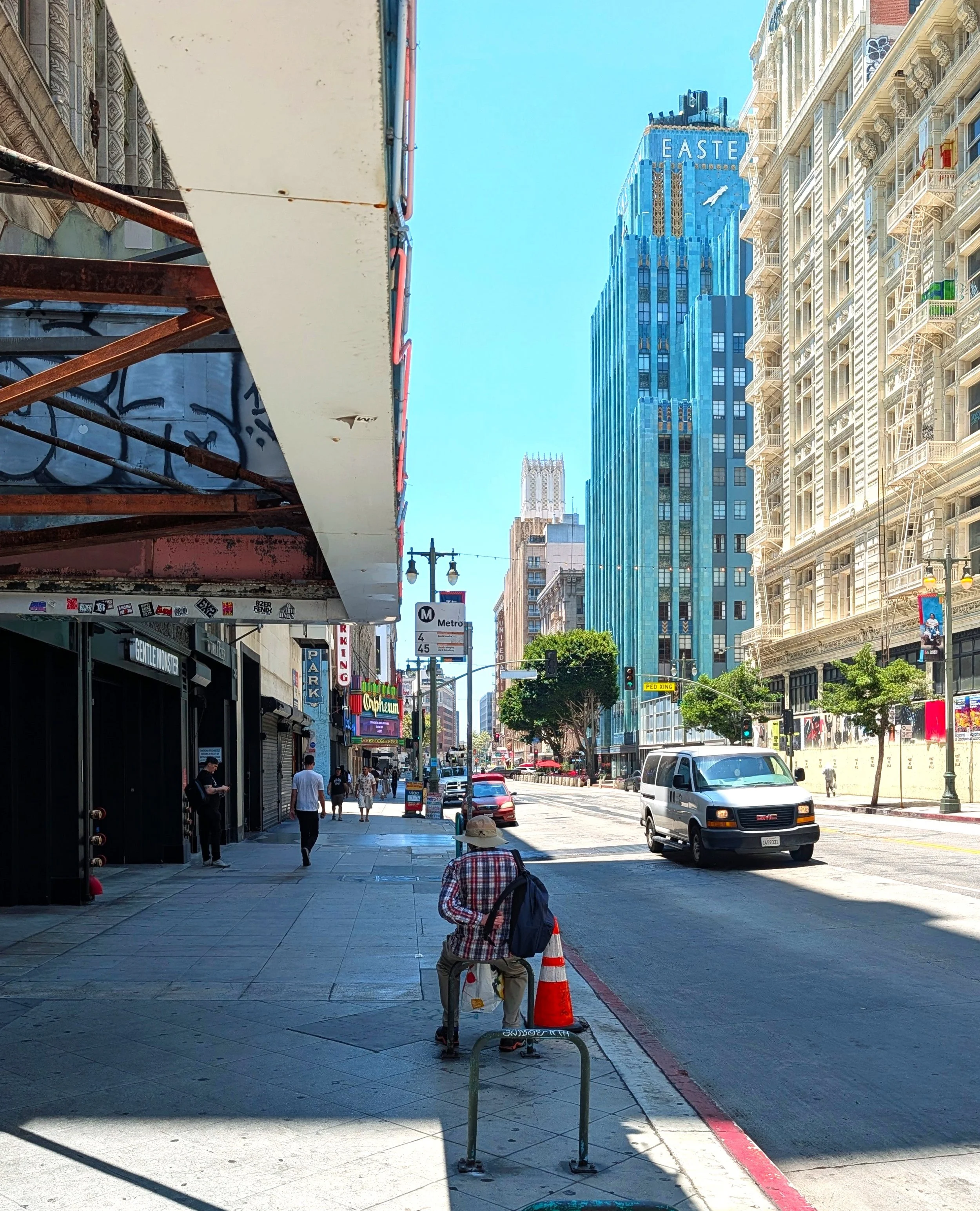
A bus rider waits for the next arrival outside Urban Outfitters onBroadway, while sittingon a bike rack. Improved shelters, seating, and shade are among the enhancements being discussed as part of Metro’s project.
These improvements are being implemented in collaboration with LADOT and also include bus shelters, sidewalk repairs, ADA curb ramps, pedestrian lighting, street trees, and wayfinding.
To understand the current discussion, it helps to understand Broadway's recent history.
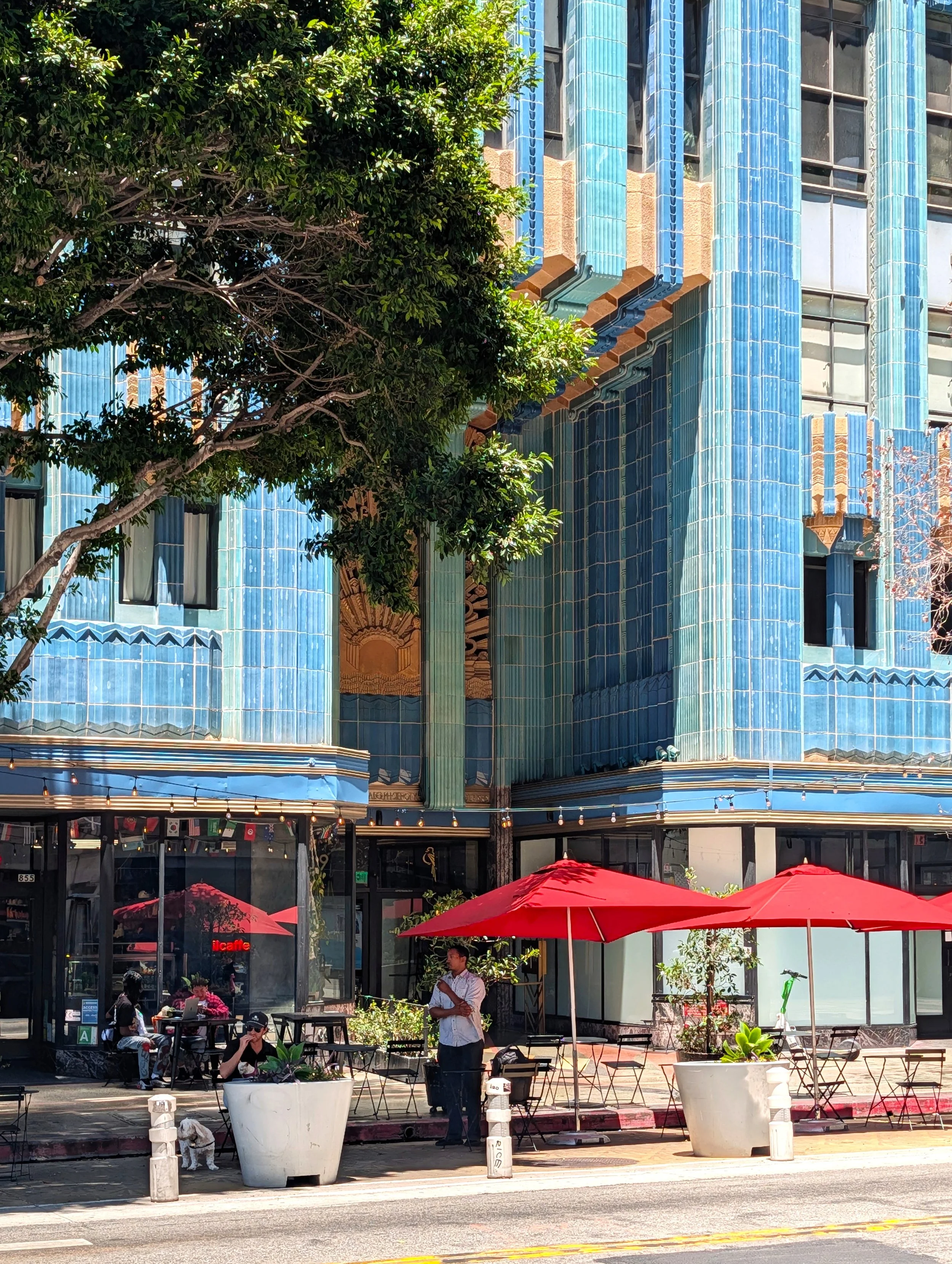
Customers enjoy coffee at iL Caffe’s outdoor seating area along Broadway. The Broadway Dress Rehearsal project created pedestrian spaces that have become some of downtown’s most active gathering spaces
In 2014, southbound bus service was moved off Broadway and onto neighboring streets as part of the Broadway Dress Rehearsal project, a component of the Bringing Back Broadway initiative. The project created expanded pedestrian areas, painted curb extensions, outdoor seating, and safer crossings. Designed to calm traffic and revitalize the corridor, the improvements have become some of downtown's most successful public spaces.
As recently as a few weeks ago, Metro's concept would have moved southbound buses back onto Broadway through the Historic Theater District, adding an additional vehicle lane. To make room, portions of the Broadway Dress Rehearsal improvements between 2nd and 11th Streets would have been significantly reduced.
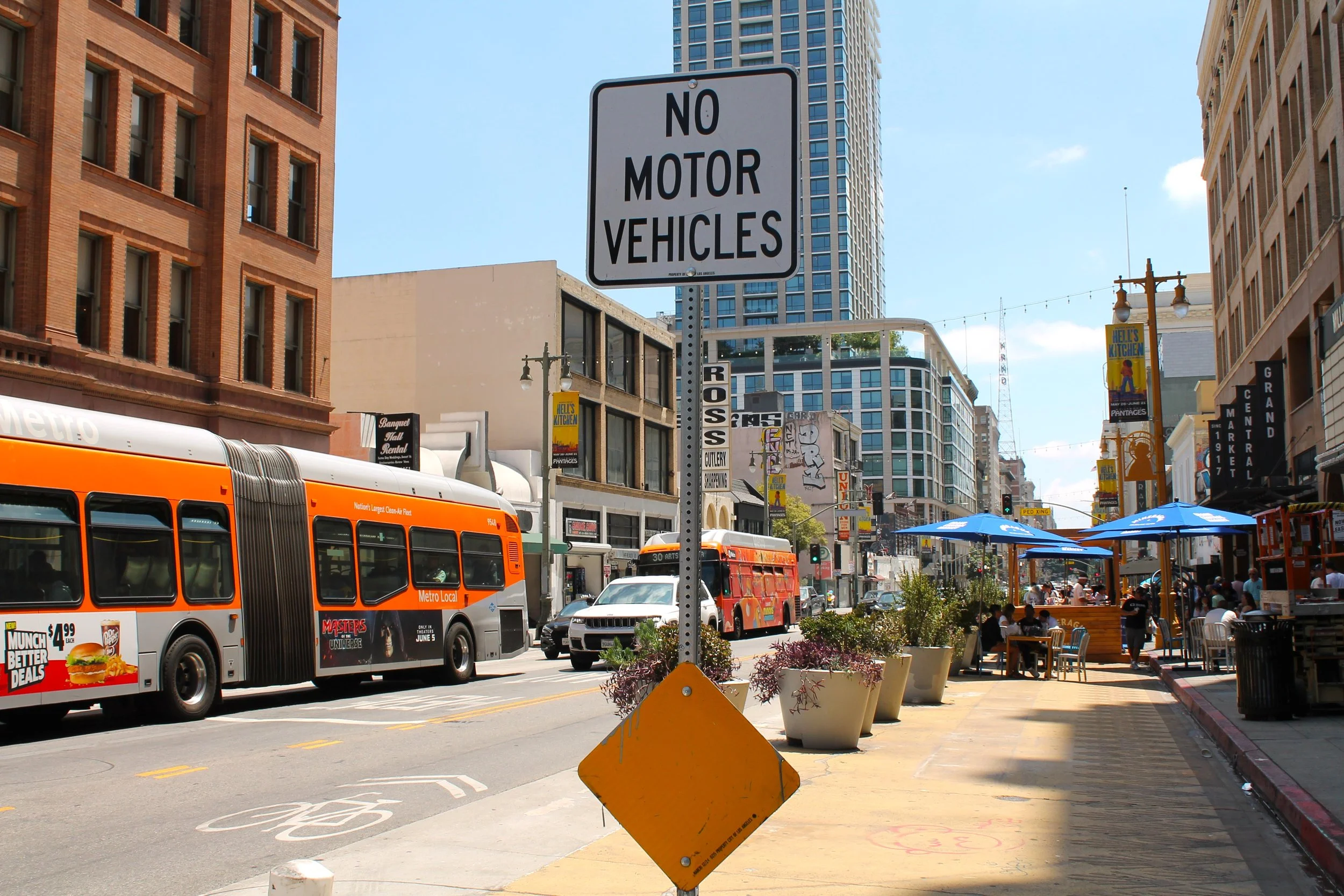
Looking south from 3rd Street, the Broadway Dress Rehearsal pedestrian area occupies the right side of the street while Metro buses and traffic lanes are on the left.
While these yellow painted pedestrian spaces may seem simple, they have become some of the most vibrant and heavily used gathering places in downtown Los Angeles. The outdoor seating areas in front of Il Caffè and Grand Central Market are often filled with people gathering, dining, and enjoying the energy of the street. These spaces help create the type of active, welcoming public realm that residents, businesses, and visitors want to see more of on Broadway.
Stakeholders also raised concerns about the impact on Broadway's historic theaters. Venues throughout the Theater District rely on curb access for performances, film shoots, deliveries, accessibility needs, and large events. Preserving Broadway's ability to function as a cultural destination is critical to maintaining the revitalized commercial corridor that so many organizations have spent years working to rebuild.
Following extensive feedback from residents, businesses, cultural institutions, and community organizations, Metro announced an important change at the June 9 DLANC (Downtown LA Neighborhood Council) meeting: it withdrew the proposal that would have substantially reduced the existing pedestrian spaces and sidewalk extensions along Historic Broadway.
This is a significant first step and a reminder that community input matters.
However, the conversation is far from over.
Metro is still evaluating how to improve bus operations through DTLA. Community members now have an opportunity to help shape what comes next.
Transit and Bus Improvements
Some of the transportation-related questions currently being discussed include:
● Whether southbound bus priority lanes should be located on corridors such as Hill St., Grand Ave., or Spring St., instead of Broadway.
● Whether Broadway should be reconfigured to allow buses, deliveries, and commercial vehicles, while restricting private automobile traffic, to improve transit reliability and pedestrian safety.
● What additional improvements Metro should pursue, including upgraded bus shelters, additional shade, improved stop design, ADA enhancements, transit signal priority, and other measures that improve the rider experience, as well as where those improvements would be most valuable.
The Future of Broadway as a Public Space
Other discussions focus on the broader future of Historic Broadway itself:
● Restoring and maintaining the Broadway Dress Rehearsal areas, including repainting faded pedestrian zones and preserving outdoor gathering spaces.
● Improving street lighting, adding more landscaping and planters, increasing shade, and investing in a more attractive and comfortable streetscape.
● Supporting outdoor dining, cultural programming, theater operations, and other activities that help make Broadway a vibrant destination rather than simply a transportation corridor.
● Exploring changes to Broadway's traffic configuration. One idea that occasionally resurfaces is converting Broadway into a one-way street. While this could create additional space for transit or other uses, longstanding transportation research has consistently shown that one-way streets often encourage higher vehicle speeds, which may conflict with goals for a safer and more pedestrian-oriented corridor.
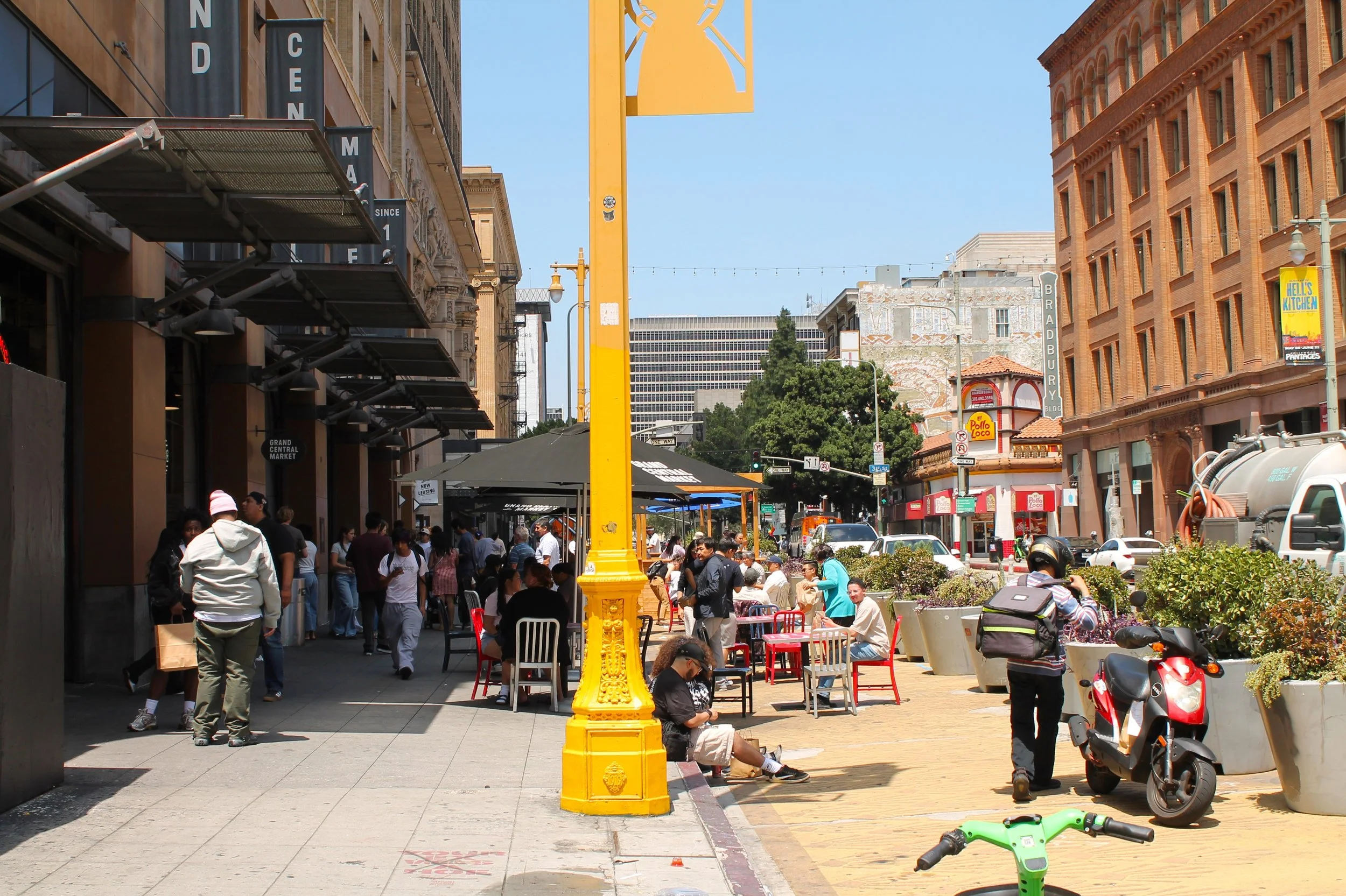
Diners gather at Grand Central Market’s outdoor seating area, separated from traffic by planters and pedestrian space created through the Broadway Dress Rehearsal project
Broadway is more than a transportation corridor. It is a historic theater district, a commercial destination, a cultural landmark, and one of downtown's most important public spaces. The decisions made over the next several months will help determine whether Broadway evolves into a more vibrant, walkable destination or becomes primarily a conduit for moving traffic.
South Park residents have a stake in that outcome. The recent changes to Metro's proposal demonstrate that public input works. Residents, businesses, and community organizations spoke up, and decision-makers listened. As discussions continue, it is important that we continue sharing our perspectives. If the community becomes silent, our ability to influence future decisions will diminish.
How to Get Involved
Join the Save Historic Broadway Coalition and sign up for updates: https://save-historic-broadway.netlify.app/#join
Share your thoughts with Metro, Council District 14, LADOT, and other decision-makers. Whether you support alternative bus routes, expanded pedestrian improvements, better bus infrastructure, additional landscaping, or other ideas, now is the time to make your voice heard.
Council District 14
Councilmember Ysabel Jurado - councilmember.jurado@lacity.org
Arianne Garcia, Deputy Chief of Staff - arianne.garcia@lacity.org
Adan Acosta, Downtown LA Field Deputy - adan.acosta@lacity.org
Metro
The Broadway Bus Priority Lanes Project Team - broadway@metro.net
Metro Priority Lanes Hotline – (213) 922-4869
LADOT
ladot.centraldistrict@lacity.org
You can also monitor upcoming discussions through the Downtown Los Angeles Neighborhood Council Planning and Land Use Committee and follow updates from SPNA.
The good news is that community voices are already making a difference. The next phase of the conversation is an opportunity to help shape a Broadway that works for transit riders, businesses, residents, and visitors alike.
By Michelle Morehead